
SIP trunks — your phone system, without the phone lines
Rated 5 stars by 271 business customers on Trustpilot.
What a SIP trunk actually is
A SIP trunk is a virtual phone line. Instead of a physical copper or ISDN circuit running into your building, SIP (Session Initiation Protocol) sets up and carries your calls over the internet connection you already have. Your phone system — the PBX in the comms cupboard — connects to our network over that connection, and to everyone who calls you, nothing has changed: same numbers, same ring, same phone on the desk.
Each trunk carries a number of channels, and each channel handles one call at a time. Ten channels means ten simultaneous conversations. That's the whole model — you pay for the calling capacity you actually need, not a rack of physical lines that sit idle between calls.
SIP trunking has been the standard way to connect a business phone system in the UK for years. It's what the big carriers themselves use behind the scenes; we simply supply it at wholesale rates, without the retail margin, the way we've supplied business telecoms since 2005.
SIP trunks vs ISDN vs hosted VoIP
| ISDN | Hosted VoIP | SIP trunks | |
|---|---|---|---|
| Where the phone system lives | Your building | The cloud | Your building — you keep your PBX |
| What connects it | Physical digital circuits | Handsets connect directly online | Virtual channels over your internet connection |
| January 2027 switch off | Being retired with the copper network | Unaffected | Unaffected — SIP is the replacement |
| Adding capacity | Engineer visits and waiting | Per user, via your provider | Add channels in hours, not weeks |
| Moving premises | New circuits, forwarding bodges | Numbers move with you | Numbers move with you |
The short version: ISDN is the old way — digital lines delivered over the copper network, and retired along with it at the January 2027 industry switch off. Hosted VoIP replaces your phone system entirely with one that lives in the cloud. SIP trunking sits in between: your PBX stays exactly where it is, and only the lines feeding it change. If you've invested in a phone system that does everything you want, SIP lets you keep it and lose the line rental.
Less to rent, more to control
- Replace line rental with capacity you actually use. ISDN channels cost money whether you're on the phone or not. SIP channels flex with your business.
- Keep your numbers wherever you go. Move office across town or across the country — your numbers come with you, no call-forwarding bodges.
- Ready for the 2027 switch off. ISDN is being retired with the copper network. SIP is where it's heading — on your timetable, not a deadline panic. (Not ready? We can keep your copper going to 2030.)
- Disaster recovery built in. Office flooded, power cut, roadworks through the cable? Calls re-route to mobiles or another site in minutes.
- Wholesale call rates on top. Moving to SIP is the natural moment to fix your call charges too — ours run up to 72% below typical retail rates.
SIP if you have a phone system. Hosted if you don't.
SIP trunking is built for businesses that already run a PBX — on-premise phone systems fed today by ISDN or analogue lines. Offices with a receptionist console and hunt groups, practices and dealerships with wired-in call recording, multi-site firms that want every branch behind one set of numbers: if the system itself is doing its job, SIP replaces the expensive part underneath it and leaves the rest alone.
If you don't have a PBX — or yours is due for retirement anyway — trunks alone aren't the answer. You'd be better served by our digital phone lines, where the phone system lives in the cloud and we manage it for you. And if what you actually need is a simple line for calls, card machines or alarms, a straightforward business phone line is still the cheapest way to get one. Tell us what you're running and we'll recommend whichever fits — if the cheaper option does the job, we'll say so.
Buy the calls you make, not the lines you rent
Sizing a SIP trunk is refreshingly simple: one channel per simultaneous call. A business that never has more than eight conversations going at once needs eight channels — regardless of how many staff, handsets or phone numbers sit behind them. Compare that with ISDN, where capacity came in fixed blocks of circuits you rented around the clock.
Better still, the number isn't fixed. Seasonal rush, a new sales team, an acquisition — we add channels in hours, not weeks, with no engineer visit and no new circuits. Quiet year? Scale back down. We'll look at your current lines and calling patterns before you order and recommend an honest starting point, not a padded one.
Keep every number you've ever printed
Your phone numbers are the part of your telecoms your customers actually know, so porting is the part of a SIP migration we treat with the most care. We port your existing numbers — single lines, whole ranges, geographic and non-geographic — onto your trunks, and we run the new service alongside your existing lines until porting completes. There's no gap where callers hit dead air.
Once ported, your numbers stop being tied to a street address. Keep your established local number when you relocate, present one head-office number from every branch, or give a new region a local presence without an office there. Want new numbers — including freephone? See our 0800 numbers or just ask when you enquire.
SIP is only as good as the connection under it
A voice call doesn't need much bandwidth, but it needs it reliably — a connection with headroom above your day-to-day traffic, and ideally one where voice can be prioritised so a big download never crackles a phone call. All three of the connections below run on the same Openreach network the big retailers use; the difference is what you pay for it.
Up to 1Gbps — plenty of headroom for a busy office's calls plus everything else you do online.
Check availability →
Dedicated, symmetric 100Mbps–10Gbps with fix-time SLAs — the gold standard under a busy phone system.
Leased lines →
A cost-effective base for smaller teams — broadband without the line rental, at FTTC speeds.
About SoGEA →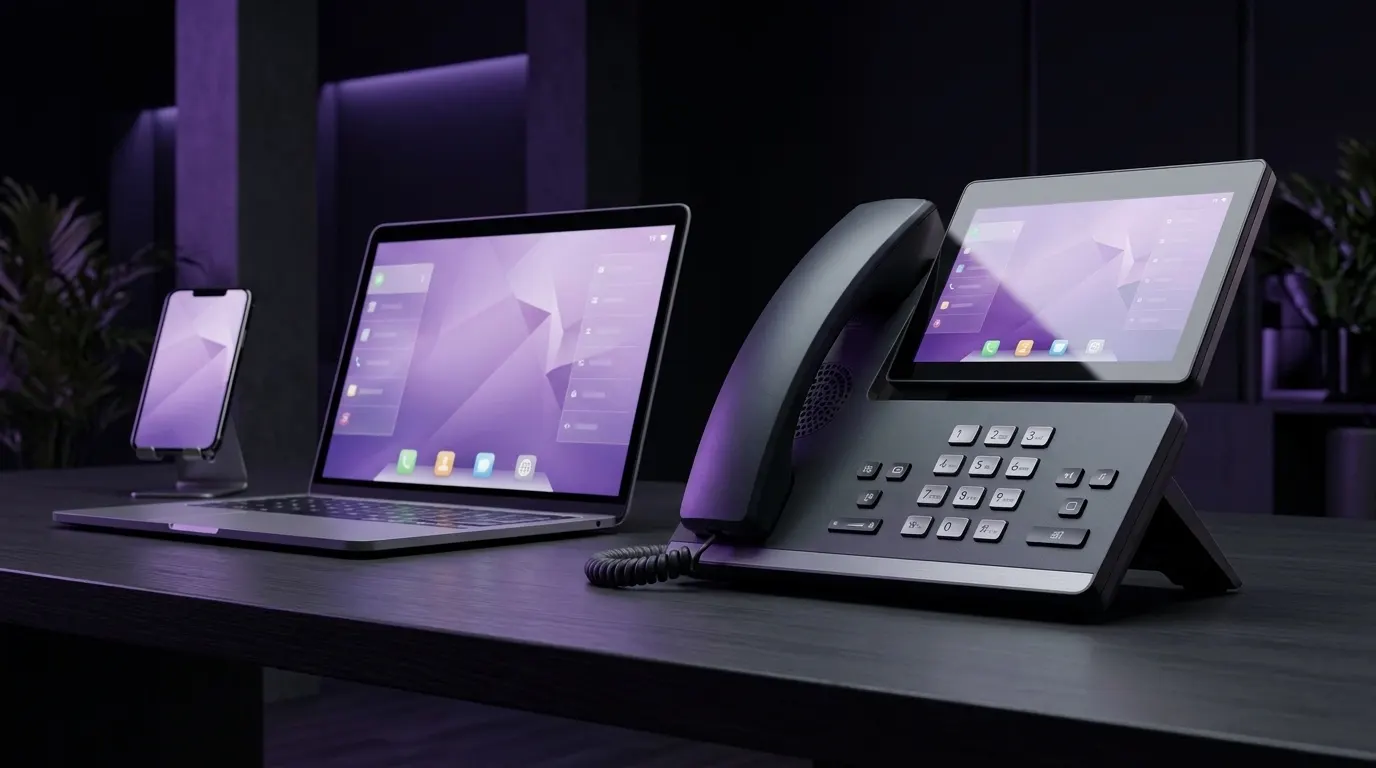
See what SIP looks like on the desk: digital phone lines
SIP trunks are the technology underneath. Our digital phone lines are the full experience built on top — touchscreen Yealink handsets, ring groups, auto-attendant, voicemail to email and call routing managed for you.
Migration without the migraine
Moving a phone system to SIP is one of those jobs that sounds scary and isn't — when it's planned by people who've done it hundreds of times. We port your numbers, configure the trunks, test everything alongside your existing lines, and only switch over when it all works. Your callers never notice a thing — except perhaps that the line sounds better.
And after the switch, you're not on your own with a ticket queue. Twenty-one years in, our support is still UK-based people who know your account and your circuit — from our offices in Poole and Hyde — and can actually change things when you call. No ticket ping-pong, no being read a script.
Businesses that made a change with us
“We have just moved to new business premises. Rebecca and the rest of the team have been exceptionally helpful and patient, making the process much less stressful.”
“Great company to work with… very professional and understanding of our needs, thank you so much.”
SIP trunking FAQs
What is a SIP trunk, in plain English?
A SIP trunk is a virtual phone line that carries your calls over your internet connection instead of a physical circuit. Your existing phone system connects to it in place of ISDN or analogue lines, and each channel on the trunk carries one call at a time. To your callers, nothing changes — same numbers, same experience.
What is the difference between SIP trunking and hosted VoIP?
With SIP trunking, your phone system (PBX) stays in your building and only the lines feeding it are replaced. With hosted VoIP, the phone system itself moves to the cloud and handsets connect directly over the internet. SIP suits businesses with a PBX they want to keep; hosted suits businesses replacing the whole system.
Can I keep my existing phone numbers when I move to SIP?
Yes. We port your existing numbers — single lines or whole ranges — onto the SIP trunks, and they stay yours even if you move premises later. We run the new trunks alongside your existing lines during the port and only switch over once everything is tested, so callers never hit dead air.
What happens to ISDN at the January 2027 switch off?
ISDN is being retired along with the analogue copper network at the January 2027 industry switch off, so any phone system fed by ISDN needs a new way to connect. SIP trunking is the direct replacement. If you're not ready to move yet, we can uniquely keep analogue copper lines running until 2030 — same line, number and kit.
How many SIP channels do I need?
One channel carries one simultaneous call, so you need as many channels as calls you expect to have going at once — not one per member of staff. We'll look at your current lines and calling patterns and recommend an honest starting point. Adding more later takes hours, not weeks, with no engineer visit.
What internet connection do I need for SIP calls?
A stable connection with headroom above your normal traffic. FTTP full fibre at up to 1Gbps suits most offices; a leased line — symmetric 100Mbps to 10Gbps with fix-time SLAs — is the gold standard under a busy phone system; SoGEA covers smaller teams. We supply the connection and the trunks together, engineered to work with each other.
Will my existing phone system work with SIP trunks?
Most phone systems from the last decade or so connect to SIP trunks directly, and many older ones can connect through a gateway. Tell us the make and model and we'll give you a straight answer — and if replacing the system with hosted digital phone lines would actually serve you better, we'll say so.
What happens to my calls if the office loses power or internet?
Your numbers aren't welded to the building. If your site goes down — power cut, flood, a digger through the cable — calls re-route to mobiles or another site in minutes. It's a level of continuity physical lines never offered.
Get a SIP trunk quote — and a straight answer on whether it's time
Tell us how many lines and channels you run today. We'll price the SIP equivalent at wholesale rates — and if your kit or connection isn't ready for the move yet, we'll tell you that too.